Wednesday, March 30, 2011

1  

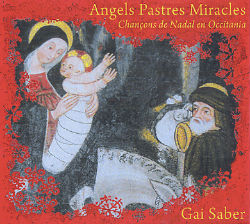
Gai Saber: Angels, pastres, miracles (Felmay, 2010)

I'm experimenting something this time. This post and the next four ones will have a common theme: the traditional music world. With this small "cycle", I'll try to explore some of the different sides and evolutions of our traditional folk music along the last fifty years. I obviously hope you'll appreciate the venture and discover some good music in the process.

The first suggestion is the last release by Occitan band Gai Saber. It's a very rich and skippy album, which merges old-fashioned Christams Carols (all sung in Langue d'Oc!) and "new" sounds influenced by drum'n'bass, dub and "patchanka" music. I know what you're thinking about: that late-Nineties plague of generally left-wing bands which threw some second-hand "traditional" element in a slapdash way into their reggae-infused "combat rock". You'll be probably relieved by the fact that "Angels, pastres, miracles" has nothing to do with that kind of music. It's some sort of new approach to the field and the extraordinary difference is revealed by two simple elements: the richness of the sound (which encompasses hurdy-gurdy, bagpipes, flutes, and electronica besides other acoustic instruments) and its extreme elegance. It's folk music played by folk musicians: that's the point. I'm sure you won't fail to get impressed by its stunning beauty.

"Angels, pastres, miracles" is the fifth album by Gai Saber. All of the other ones are very good, but I specially recommend their masterpiece "Electro Ch'oc" if you like this record.

Here's the review of "Angels, pastres, miracles" I wrote for the website Ondarock.it (in Italian).

Tracklist:
  1. Patres de Largentiera
  2. Lou premier miracle
  3. La camba me fai mau
  4. Micoulau Nostre Patre
  5. Venes venes
  6. San Jauze eme Mario
  7. Anuech quand lou gau cantavo
  8. Lou viage di Tres Rei
  9. Rapataplan
  10. La Caterineta
  11. Pastre de la campagno
Credits:
  • Chiara Bosonetto, Rosella Pellerino, Eugenia, Costanza, Antonio Rapa: vocals
  • Elena Giordanengo: harp, galobet, vocals
  • Maurizia Giordanengo: accordion
  • Alex Rapa: acoustic guitar, digital programming, vocals, mandolin
  • Simone Lombardo: hurdy-gurdy, hornpipes, flutes
  • Lorenzo Arese: drums
  • Giorgio Boffa: double-bass
  • Massimo Baudino: backing vocals
  • Eugenia Rapa: violin
Download (~200 kbps)


Similar music on the blog:
Calicanto: Venexia (Compagnia Nuove Indye, 1997)
Sinenomine: Spartenza (Incipit Records, 2009)

Friday, March 18, 2011

0

Enrico Rava: Pupa o crisalide (Vista, 1975)

Enrico Rava's the one musician who's almost unanimously credited abroad to have invented Italian Jazz. As a matter of fact, he was the one who first got some important international recognization back in the early Seventies, and brought the attention of foreign jazz listeners to our rising Italian scene.

"Pupa o crisalide" isn't his most acclaimed record, but it's my favourite one. It's a good summary of the first phase of his solo career, and it contains tracks recorded with three different ensembles: an all-Italian line-up for the opener and closer - recorded in Rome, an Argentinian octet for the B-side of the lp - recorded in Buenos Aires, and finally an impressive American septet (just two names: Jack DeJohnette, John Abercrombie) for the A-side, recorded in New York.
The musical style clearly reflects the composite nature of the album. The first half is funkier, edgier and more fiery, evidently influenced by the jazz-rock/fusion tendencies that were spreading during those years. The second one is more placid and skippy, and elegantly incorporates some latin/samba elements in the alchemy.
The two halves are held together by the timbric similarity of the line-ups (which feature almost the same elements), and by Enrico Rava's renown trumpet style. Often compared to Miles Davis and Kenny Wheeler, his technique envisages rarefied notes, full of ambience, and erratic melodic lines which surprisingly do not undermine the "presence" of his trumpet sound. On the contrary, Rava's trumpet charisma seems to emerge right from this amazing equilibrium of detachedness and red-bloodedness.

Check out "Quotation Marks" too if you like this record.

Tracklist:
  1. Pupa o crisalide
  2. C.T.'s Dance
  3. Tsakwe
  4. El Samba Graciela
  5. Revisione del processo n. 6
  6. Lingua franca
  7. Giromondo (per piccoli feddayn, terzi bimbi e altri mutanti)
Credits:
Tracks 1, 7:
  • Giovanni Tommaso (bass)
  • Bruno Biriaco (drums)
  • Michele Ascolese (guitar)
  • Mandrake (percussion)
  • Franco D'Andrea (piano)
  • Tommaso Vittorini (tenor saxophone)
Tracks 2, 3:
  • Herb Bushler (bass)
  • Jack DeJohnette (drums)
  • John Abercrombie (electric guitar)
  • Ray Armando, Warren Smith (percussion)
  • David Horowitz (piano, electric piano, synthesizer)
Tracks 4, 5, 6:
  • Rodolfo Mederos (bandeon)
  • "El Negro" Gonzales (double bass)
  • Nestor Astarita (drums)
  • Ricardo Lew (electric guitar)
  • "El Chino" Rossi (percussion)
  • Finito Ginbert (tenor saxophone, flute)
  • Matias Pizzarro (piano)
All tracks:
  • Enrico Rava (composer,  trumpet)
Download (192 kbps)


Similar music on the blog:
Tanit: omonimo (Classico, 1992)
Spirale: omonimo (King, 1974)

Sunday, March 13, 2011

0

Kind of Cthulhu: Wadjĭwĭng' (Azteco, 1987)

"Obscure"'s the best term to describe this record. It's obscure in a musical sense, for its sound and atmospheres, and in a documentary sense: to be short, almost no information about it can be found on the web.
Let's focus on music first. Wadjĭwĭng' is a quite surprising "progressive" blossom of mid-Eighthies industrial music experimentation. While the mood and approach decidedly reflect the taste for decadence, vagueness and approximation which is a defining trait of some industrial music circles, the musical form and the sound of the tracks are much closer to early-Seventies "dark" psychedelia (long instrumental tracks and digressions, organ, choirs...) and, most amazingly, to full-fledged progressive music. There are sombre, percussive sections reminding of Magma and eerie keyboard ostinatos not far from Goblin stuff. Then chamber-music sketches (Julverne? Maybe even Aksak Maboul), exoteric folk allures (Comus!), airy flute passages and soft openings which even seem to hint at the dreamiest episodes of Italian progressive (Pierrot Lunaire?).
Many comparisons can be traced, but none seems to grasp the essence and singularity of this album, basically a fish out of water, a progressive album made with strictly post-punk sounds, recording techniques, instrumental skills, and mentality. In some sense, is an utterly imprecise work; on the other hand, though, this clumsiness's necessary for its uniqueness and charm.

The few data that are known about the album help to guess its context, but don't enframe it exactly. Kind of Cthulhu was a project based in Parma and signed to the short-lived label Azteco Records, active between 1983 and 1988 and linked to the band T.A.C. (Tomografia Assiale Computerizzata) and its related post-industrial community. Two records were published under the evidently Lovecrafian moniker Kind of Cthulhu: an ep in 1986, and this lp. All of the two featured contributions by T.A.C. founder Simon Balestrazzi (later of Kirlian Camera) and credit a steady core of musicians, which were most probably the members of the band: Andrea Ascenso, Antonio ("Franz"?) Menozzi, Marco Cattabiani, Mario Mascitelli.

Tracklist:
  1. Liutelio
  2. Overload
  3. What's This Kind of Cthulhu?
  4. A Believer
  5. Red Wine
  6. Wadjĭwĭng'
  7. Next Spring
  8. Thrust of Love
  9. Misk Cjezscjesz
Credits:
  • Marco Cattabiani: bass, keyboards, harmonica, vocals, effects 
  • Patrizia Mattioli: clarinet
  • Andrea Azzali: double bass
  • Mario Mascitelli: drums, percussion, bass, vocals, indian flute
  • Franz Menozzi: guitar, flute, keyboards, percussion, vocals
  • Andrea Ascenso: lead vocals, guitar, keyboards, percussion, bass, drums
  • Massimo Colonna: saxophone
  • Paola Sartori: violin
  • Patrizia Mattioli, Simon Balestrazzi: vocals
  • Ivano Bizzi: Engineer
Any additional information about the band and the record is welcome, of course!

Download  (320 kbps)


Similar music on the blog:
Tomografia Assiale Computerizzata: omonimo (Azteco, 1983)
Goblin: The Goblin Collection, 1975-1989 (DRG, 1995)

Friday, March 11, 2011

1  

Three Second Kiss: Everyday-Everyman (Wide Records, 1998)

Good ol' noise-rock, in the mid-Nineties style heralded by Steve Albini's Shellac. Which means sharp edges, raw and rattling guitar slashes, disassembled/reassembled grooves. In a word: math-rock.
Engineered by Chicago-punk veteran Iain Burgess (the man behind Big Black's "Atomizer"), "Everyday-Everyman" has a memorably corrosive sound: the guitars emit a rasping, wrecked jingle-jangle, the drums are dry and convulsive, and the bass is as metallic as rust, as thundering as a roar. Two opposites define the album: a psychotic obsession for hyper-cerebral intrication and aseptic structures, and a feeling of total clumsiness and lack of precision.
The compositions aren't that important after all: all they have to do is provide the sound a constant stream of harsh and contorted guitar riffs, uneven stop'n'go dynamics and metronomic bass patterns. They serve quite well for the purpose, and that's all about them.

Three Second Kiss are a guitar-bass-drums "power trio" from Bologna. They're among the most celebrated artists of the Italian math-rock scene, which is quite renown abroad. This is their second lp out of four, and it features the guest appearance on vocals of Uzeda's singer Giovanna Cacciola (for the very short track "Pipeline").

Tracklist:
  1. Operation Dragon
  2. Everyday-Everyman
  3. Wolf
  4. Pipeline
  5. I Cried, You Didn't Listen!
  6. Rope
  7. The First Fire
  8. Speak, It's So Dark
Download (192 kbps)


Similar music on the blog:
Uzeda: Different Section Wires (Touch and Go, 1998)
Taras Bul'ba: Incisione (Wallace, 2005)

Monday, March 7, 2011

0

Andrea Sartori: Il tagliacode (Persona, 2007)

Stravinskian techno. Doesn't sound very zippy, huh?! But you'll change your mind after just a few notes, if you happen to listen to "Il tagliacode". The album's one of those jazzy, abstract, broken-beat-based acoustic/electronic hybrids which often go under the name "intelligent dance music"; unlike most of the music in the genre, though, crebrality's not the first trait emerging from its complexity. On the contrary, the main impression is lightness - which doesn't mean silliness: the music still sounds very classy, even "aristocratic", and the evident complexity of its rhythms clearly cuts out any connection with italo-disco's flippancy; instead of trampling the listener with mind-blowing rhythm discharges, though, the tracks catch him in carefully-built tech-house grooves, abstract-yet-airy lounge tunes mixing live instrumentation, glitchy exotica/soundtrack suggestions and acid electro basslines. It almost sounds like a 21st Century reworking of the old "library music" concept. You could imagine the result as some sort of Amon Tobin/Akufen meeting point, but much less ostentatiously "intellectual" than both. The best thing you can do's anyway checking out a couple of tracks ("Uova di gatto" and "Vodkatronic" for instance).

Andrea Sartori was born in Bologna in 1978. He graduated in Informatics and started making electronic music about the 90s, under the name Deepalso. Later, he met fellow Italian techno artist Touane, who introduced him to the guys of Berlin-based label Persona. "Il tagliacode"'s his only album up to now, and features eleven electronic tunes based on some manipulations of jazz-music reharsals recorded in Foligno.


Tracklist:
  1. Supertele
  2. Uova di gatto
  3. Santa Chimera
  4. Il tagliacode
  5. Rompicapo
  6. Ehi amigo, serve un'autoradio
  7. Horror vacui
  8. Oltre il profondo
  9. Prima le signore
  10. Vodkatronic
  11. Outro
Download (~160 kbps)


Similar music on the blog:
Touane: Figura (Persona, 2008)
Jolly Music: Jolly Bar (Nature/Wide, 2000)

Thursday, February 24, 2011

3

Aucan: Black Rainbow (La Tempesta, 2011)

Let's try something new. As you probably noticed, posts in this blog follow a strict cycle by decade: one album from the 00s, then one from the 90s, then one from the 80s... Until today, the 10s were totally ignored.
Including the current decade in the post cycle is quite a challenge for me for at least three reasons. The most trivial one is that as for now "the 10s" means just two years, so the choice is quite limited; this gets even worse since my policy for the blog is to post only music I really enjoy, and my tastes are quite difficult (and this was the second reason). Finally, there are already some excellent mp3-blogs following Italian latest releases (eg, The Breakfast Jumpers), and they're much richer, better-timed and more read than mine: what can I add? Well, I don't know. Probably nothing. But I'll experiment the same, and see if people like it or not. I'll monitor the downloads, and if they're ok... then I'll just keep on posting new albums alongside old ones.

Just another quick boring note before getting to today's album: have you noticed the fist icon in the left column of the blog? It links to Il Golpe e l'Uva Facebook profile. Subscribing will keep you informed of new posts, provide you some tasty links and videos that don't get published on the blog, and offer a good way to keep in touch, specially if you speak Italian - since the profile is in Italian.

And now, let's launch the new decade with a much hyped release...

I don't know of any Italian artist flirting with UK's dubstep tendencies. Or at least that was true before Aucan started incorporating halftimes in their music and make it sound more and more electronic.
"Black Rainbow" doesn't sound Italian at all. This is the most striking thing about it: it seems to come from London, Bristol or some place like that. It's some sort of eerie, metropolitan trip-hop hijacked into an electro-rock route. It features the same evil broken beats of Milanese or Caspa, deprived of the mud and made dry, massive and abstract. It's like Lightning Bolt goes to the club, with just a slight vocal hint at Portishead or Burial to content discerning palates.
Materpiece? Definitely no, but hey - it's damn good anyway.

Aucan are a trio from Brescia. Their first album came out in 2009 and was welcomed as the Italian response to Battles (it wasn't very good in my opinion, but neither Battles were, after all). 2010 saw them publishing an ep which marked their departure from math-rock, promptly confirmed this January by the release of their second album.

Tracklist:
  1. Blurred (feat. Angela Kinczly)
  2. Heartless
  3. Red Minoga (Short Edit)
  4. Sound Pressure Level
  5. Storm
  6. Embarque
  7. Save Yourself
  8. Underwater Music
  9. In a Land
  10. Away!
  11. Black Rainbow
Download (320 kbps)


Similar music on the blog:
Dusty Kid: A Raver's Diary (Boxer Recordings, 2009)
Touane: Figura (Persona, 2008)

Tuesday, February 22, 2011

2

Mauro Pagani: Self-Titled (Ascolto, 1978)

The late Seventies are one of the most overlooked periods in the history of Italian rock music. Just while our mediocre "punk" scene was slowly mutating into a florid post-punk milieu, the last remnants of the progressive era were evolving into something new and really unique. Some artists would undertake a "new wave" metamorphosis (think of Franco Battiato), some would hybridate with disco music (Goblin's Claudio Simonetti for example), some would delve into the fascinating musical traditions of the Mediterranean, getting closer and closer to the musical resarch of the "Canzonieri" movement.
P.F.M.'s Mauro Pagani's one of the key figures for this latter trend. After quitting P.F.M. in 1976, he ventured in a dense series of projects aimed at a new fusion of jazz-rock, ancient and traditional folk music, avantgarde experimentation. His first solo lp is perhaps the most mature fruit of his new interests and vision. The recording of the album involved three of the most proficient units around at the time in those fields: Area, P.F.M. and Canzoniere del Lazio, which cooperated in many tracks. It also features guest appearances of outstanding musicians such as former Musicanova singer Teresa De Sio and the amazing acoustic trad-folk guitarist Luca Balbo.

The music is outstanding and extremely varied. A mix of Middle-Eastern flavours, Southern Italian melodies, Sardinian dances; all coupled with refinate arrangements blending chamber music, jazz-rock and captivating avantgarde dilatations in a surprisingly light style.
To make it short: this is one of the best Italian albums ever published. Get it.


Tracklist:

  1. Europa minor
  2. Argiento
  3. Violer d'amores
  4. La città aromatica
  5. L'albero di canto (Parte 1)
  6. Choron
  7. Il blu comincia davvero
  8. L'albero di canto (Parte 2)
Credits:
  • Mauro Pagani: violin, viola, mandolin, bouzouki, flute, composer, arranger (all tracks except 7)
  • Mario Arcari: oboe (tracks 1, 2)
  • Luca Balbo: guitar (track 7)
  • Walter Calloni: percussion (tracks 1, 6)
  • Teresa De Sio: vocals (track 2)
  • Roberto Colombo: polymoog (track 4)
  • Area:
    Demetrio Stratos: vocals (tracks 5, 8)
    Patrizio Fariselli: piano (tracks 1, 5)
    Giulio Capiozzo: drums (tracks 1,5)
    Ares Tavolazzi: bass, double bass (track 5)
  • P.F.M.:
    Franz Di Cioccio: drums (track 4)
    Patrick Djivas: bass (track 4)
    Franco Mussida: guitar (track 4)
  • Canzoniere del Lazio:
    Giorgio Vivaldi: percussion, talking drum (tracks 1, 6)
    Pasquale Minieri: percussion (track 1)
  • Allan Goldberg: engineer (tracks 1, 2, 3, 5, 8)
  • Carlo Martenet: engineer (tracks 4, 7)
  • Marco Inzadi: engineer (track 6)
  • Piero Bravin: mix (tracks 4, 7)
Download (224 kbps)


Similar music on the blog:

Premiata Forneria Marconi: Passpartù (Zoo Records, 1978)
Area: Maledetti (Cramps, 1976)

Monday, February 21, 2011

0

Hipnosis: Self-Titled [Memory Records, 1984]

Disco-music for starship parties: an imaginative but suitable description for the music of Hipnosis's first and only album. Its all-electronic style merges Moroder-like disco beats with highly melodic synthesizer lines, much nearer to the ones of "progressive electronic" artists as Vangelis or J.M. Jarre than to the usual soul-music colours of disco music (two tracks, "Pulstar" and "Oxygene", are actually Vangelis/J.M. Jarre covers). No vocals are present, but the music's always very catchy and much more focused on melody and on creating an optimistic sci-fi ambience than on the driving force of rhythm, which serves mostly as a background.

Hipnosis was a short-lived project started in Parma in the early Eighties by producer Stefano Cundari. In 1982 Kirlian Camera's leader and keyboardist Angelo Bergamini joined the band; as far as I know, though, he left the band before the release of their album. Most Hipnosis releases are concentrated around 1983/1984, but in 1987 a cover of Automat track "Droid" was released. In 1992 a lp featuring almost the same tracks of the first album came out under the name "Hypnosis", but the band was composed by different musicians and had no relationship with the original project .


Tracklist:

  1. Inesi
  2. Windland
  3. Argonauts
  4. Pulstar
  5. Borhaz
  6. Astrodance
  7. Space Crusaders
  8. Oxygene
  9. Theme for New Years
Download (192 kbps):
 Badongo
 Megaupload
 Deposit Files
 2shared
 zshare


Similar music on the blog:
Automat: Automat (EMI, 1978)
Giorgio Moroder: E=mc² (Durion, 1979)

Tuesday, February 15, 2011

0

Technogod: Hemo Glow Ball (Contempo, 1992)

Hip-hop, techno, industrial: "Hemo Glow Ball" is a crucible of genres. Samples, mechanical beats, acid electronic basslines and distorted guitars are the key components of Technogod's sound alchemy. They serve as a background for angry rapped lyrics (dealing apparently with socio-economical themes) but they are evidently the most important elements of their formula, entirely based on the chemical reactions within them.
Everything from jazz to funk to world music can be traced in the sound, but the atmosphere is firmly dominated by an inhuman, alienating mood which links directly to the band's industrial-music filiation. Some more guitar-laden tracks may parallel with the crossover style of Rage Against the Machine or Asian Dub Foundation, but the album is very varied and quite difficult to compare to anything else (maybe just Foetus or Young Gods would suit). The language chosen for the lyrics is English, but the pronounciation is surprisingly good notwithstanding a slight drawl.

Technogod are Gelo Degli Esposti, George Koulermos and Maurizio Liguori, from Bologna. This is their first Lp, after the Ep "Cola Wars". This is the only record of theirs I successfully managed to get, and I'd be very glad if anyone could provide me any of the others. Thanks in advance (and good listening!).


Tracklist:

  1. Cola Wars
  2. The Flow
  3. Fatwa
  4. Pueblocide
  5. Policy of Containment
  6. Introxigen
  7. Never Be the Same
  8. Mission
  9. Nuclear Prayer
  10. Thankful
  11. Trauma Remote
  12. G.L.A.D. (Part 2)
  13. Pueblocide (Federal Mix)
  14. Mañana
Download (192 kbps)


Similar music on the blog:
Deca: Claustrophobia (Labyrinth Records, 1989)
Monomorph: Alternative Fluid (Disturbance, 1994)

Wednesday, December 1, 2010

1  

Nada: L'amore è fortissimo e il corpo no (Storie di note, 2001)

There's a current which spawned through the Italian Nineties, corrupted most of their music and still drenches many contemporary productions with its fetishism for decadence and corporality. I'm talking about the "alternative rock" trend encompassing anything from Afterhours to Marlene Kuntz, such plagues as Giorgio Canali, Cesare Basile, and other of their fellow sulkers.
One of the very few good good outcomes of that scourge is Nada's "L'amore è fortissimo e il corpo no". It's not an orthodox representative of the trend, but it's a very good album indeed, and the influence of straighter "alternative" styles is evident. Basically, it's a singer/songwriter work, with very mature and raw lyrics depicting problematic lives and destitute conditions. More than narrating or describing, the songs "furnish" the space with sounds and scattered images, making you perceive the very mood of the situations.
Nada's voice is stark and livid, but shows an adultness which completely sets it apart from the "poser" attitude of the stereotypical late-Nineties "loser". The sound mixes sombre jazz/blues atmospheres, acoustic timbres, and hints at some trip-hop solutions. Someway, it reminds of the extraordinary ambience of Serge Gainsbourg's "L'histoire de Melodie Nelson". There are many harsher "rock" grafts though, right with the alternation of coarse sounds and effected "psychedelic" passages which is typical of Italian alternative rock. A couple of tracks are a bit brighter nevertheless, and even feature some reggae influences or musical box sounds.

Nada Malanima was born in 1953 in the province of Livorno (Tuscany). She debuted when she was just sixteen, and crossed four decades with a high-quality career marked by important artistic partnerships (Piero Ciampi, Paolo Conte, Goblin, Avion Travel...). During the Nineties she approached to songwriting, and "L'amore è fortissimo e il corpo no" is her third album as an author.

Tracklist:
  1. Gesù
  2. Giulia
  3. Meraviglioso
  4. L'amore è fortissimo
  5. In generale
  6. Grazie
  7. La musica antica
  8. Suonano alla porta
  9. Questa donna
Download (192 kbps)


Similar music on the blog:
La Crus: omonimo (1995)

Fiorella Mannoia: Certe piccole voci (Harpo, 1999)

Wednesday, November 24, 2010

4

Eugenio Finardi: Sugo (Cramps, 1976)

An album reflecting the mood of its time, the strong political involvement of Italian music in the mid-Seventies. The opening track is one of the best known symbols of the era, "Musica ribelle", celebrating the unstoppable urge of rock music, dragging away the youth from their comfortable passivity and making them part of the "rebellion". Despite the strong connection with the social climate of the period, the song is direct, heartfelt and lacks any rhetorics: for these reasons, it hasn't aged at all, and is still as intense and striking as it was at the time.
The rest of the album is much less topical in its themes - and much more evidently naïve in the rhymes, but is musically very good nontheless. The band who played on the record was composed of top-notch musicians from the Milanese progressive scene: Area's Patrizio Fariselli, Paolo Tofani, Ares Tavolazzi, (soon to be) PFM's Lucio Fabbri and the well-known Cramps Records sessionmen Hugh Bullen, Walter Calloni, Alberto Camerini. "Quasar" is an all-instrumental track clearly reminding of Area, but the album's most remarkable for its fusion of jazz-rock with American folk-rock models (a pretty unusual fact, since it was the UK which inspired most of the musicians back in those days). Finardi's passion for American music has its biographic roots: Finardi's mother is American and he was raised in an American school in Milan. His excellent English pronounciation can be noticed in "La C.I.A.", an intriguing and quite "early" raggae/rock experiment.

Here's an interesting documentary/interview about "Musica ribelle" (in Italian).


Tracklist:
  1. Musica ribelle
  2. La radio
  3. Quasar
  4. Soldi
  5. Ninnananna
  6. Sulla strada
  7. Voglio
  8. Oggi ho imparato a volare
  9. La C.I.A.
  10. La paura del domani
Download (160 kbps)

Similar music on the blog:
Alberto Camerini: Cenerentola e il pane quotidiano (Cramps, 1976)
Area: Maledetti (Cramps, 1976)

Thursday, November 18, 2010

3

VV.AA.: Ref. 907 (Italian Records, 1981)

An early compilation witnessing the earliness and originality of Italian minimal-synth scene. Published by the quintessential new wave label Italian Records, it features a selection of three songs for each of five bands: Eurotunes, Ipnotico Tango, Metal Vox, Absurdo, Kerosene.
Almost no information about the bands can be found on the internet, but Eurotunes have a Myspace page and it says they were based in Rome. The overall sound of the record, anyway, isn't that far in spirit from the one of the mostly Bolognese bands heralded by Italian Records: Gaznevada, Stupid Set, Hi-fi bros, Confusional Quartet. It is, basically, de-evoluted rock based on primitive-sounding synthetizers, with very repetitive beats and skeletal riffing held by the sawtooth register of the keyboards. As for the aforementioned Italian Records bands, the prominent references seem to be the contemporary scene of the American North-East, with two subtler yet distinct influences coming from the alienating synth-pop sounds of Sheffield and post-industrial England, and perhaps more evidently from the New York no wave/mutant disco circuit - the latter fact making many tracks remind of the extraordinary "Great Complotto" scene of Pordenone.
The defining trait differentiating the five bands of Ref. 907 from their labelmates is essentially the darkness and illness of their sound. Though it has almost nothing in common with the growing "darkwave" trend of those years (no abyss and woe, at all) the music shows a taste for bleak and morbid atmospheres, combined with schizoid/spastic vocals and discomforting instrumental intermissions.
The bands are quite different one from the other, but I'll let you discover yourself their particularities. I'll just say everytime I listen to this compilation I have different opinions on what's my favourite!


Tracklist:
  1. Eurotunes: European's Progress
  2. Eurotunes: I Got the Beak
  3. Eurotunes: Osaki Motion
  4. Ipnotico Tango: Ipnotico Tango
  5. Ipnotico Tango: Spasmodico Rango
  6. Ipnotico Tango: Erotico Mango
  7. Metal Vox: Future World
  8. Metal Vox: T.V. Hero
  9. Metal Vox: Infinity
  10. Absurdo: O'vel
  11. Absurdo: Audio Output
  12. Abdurdo: Sex in Ball
  13. Kerosene: Meccano
  14. Kerosene: Jazz Rock
  15. Kerosene: Stivali
Download (256 kbps)
The compilation was already posted on Mutant Sounds, but some tracks were missing.


Similar music on the blog:
Gaznevada: Sick Soundtrack (Italian Records, 1980)
Confusional Quartet: omonimo (1980)

Monday, November 15, 2010

3

Sui blog di musica italiana / About Italian music blogs

(Per una volta, scrivo anche in italiano)

Come avrete forse notato, ho aggiunto nella barra a lato uno spazio che mostra gli ultimi post di altri blog riguardanti la musica italiana. Questo mi dà l'occasione per una piccola riflessione/riassunto.
Quando ho dato il via a questo download-blog, nell'aprile 2008, ce n'erano pochissimi dedicati espressamente alla musica nostrana. Che io ricordi, gli unici ad avermi anticipato sono stati Italian folk music, Orrore a 33 giri, 7'' from the underground e l'indimenticabile Anni di piombo, anni di pailettes, purtroppo "morto" presto. Erano tutti abbastanza settoriali, quindi avevo gioco facile a pubblicare album che non fossero già reperibili nella blogsfera.

Sono passati solo due anni e mezzo, ma il panorama è cambiato radicalmente; e in meglio, per una volta. Oggi come oggi, conto dieci blog attivi dedicati esplicitamente alla musica italiana - e sono sicuro di essermene perso qualcuno. La maggior parte si occupa di periodi specifici, o manifesta una netta predilezione per alcuni generi (anche il mio, alla fine della fiera, non è che uno specchio dei miei gusti); messi tutti insieme, però, coprono uno spettro veramente ampio di settori. I blog sono aggiornati con frequenza, ma la cosa più sorprendente è la capacità che hanno di portare alla luce continuamente dischi rari e dimenticati. Io passo un bel po' di tempo a spulciare liste su internet, o cartelle di file in share sul p2p, per scoprire nuovi (vecchi) dischi italiani, ma puntualmente quando faccio una visita a uno di questi blog mi imbatto in cose di cui ignoravo totalmente l'esistenza - e mi domando: "Ma questo dove diavolo l'ha trovato!?". Il fatto è che ognuno ha i suoi canali preferenziali: blog come The Breakfast Jumpers o Indieitalia (da poco chiuso, ma non per questo dimenticato) hanno sviluppato contatti con molti artisti indipendenti e netlabel attuali; altri blog sfruttano la loro amicizia diretta con artisti del passato, o saccheggiano le fiere del vinile in cerca di rarità da "rippare", o consultano enormi archivi personali di fanzine... Questa varietà e costanza nelle scoperte è la cosa che più mi entusiasma della situazione attuale.
Un piccolo aneddoto la dice lunga sulla "rivoluzione" accaduta nell'ultimo paio d'anni. Non sono mai stato un gran collezionista di musica "fisica" (cd, vinili, cassette o che altro) e la grandissima parte delle cose pubblicate sul mio blog viene dal p2p. Uno dei pochissimi album che ho "rippato" personalmente è stato l'omonimo dei La Crus: non riuscivo a trovarlo in rete in nessun modo, e ho finito per comprarlo, appositamente per lo scopo. Ora, tra blog e p2p, trovarlo è decisamente più facile. Ma, soprattutto, i dischi che proprio non riesco a trovare in alcun modo sono ben più rari e sconosciuti!

Ogni tanto, mi viene il timore di aver pressoché esaurito le scorte riguardo a questo o quell'altro periodo, e temo di dover ripiegare su dischi di seconda scelta o iniziare a ripetermi assai di più con generi e artisti. Poi però mi faccio un giro sugli altri blog e vedo che traboccano di cose stuzzicanti di cui non so niente di niente. Così mi convinco che ce n'è ancora quanta se ne vuole di musica da riscoprire, e mi ributto nella ricerca...
Temo però che difficilmente mi passerà la convinzione che i nostri anni novanta musicali siano stati un'era rozza e oscura :P

ps. Fate caso a Ondarock! A breve arriverà un ampio speciale sui blog più legati alla nostra attuale scena indie!


As you may notice, I've added to the blog sidebar a dynamic box summarizing the latest posts of other great blogs dealing with Italian music. This suggests a small reflection & recapitulation.
When I started this download blog, back in april 2008, there were really very few expressely focused on the rediscovery of Italian music. The only ones to precede mine were, for what I can recall Italian folk music, Orrore a 33 giri, 7'' from the underground and the extraordinary, but short-lived, Anni di piombo, anni di pailettes. All of them were pretty sectorial, so it was very easy for me to share music which wasn't available yet on the blogsphere.

Just two years and a half have passed, but the landscape has radically changed; and, for one time, for the better. Today, I can count ten active download blogs strictly dedicated to Italian music - and I'm sure I'm missing some. Most of them deal with specific periods, or show a strong predilection for some genres (mine too, after all, is definitely a mirror of my tastes), but considered in the complex they cover a very broad part of Italy's buried treasure-rooms. They have a consistent post rate, but the most amazing thing is their ability to bring to light without cess really rare and obscure records. I spend a considerable amount of time skimming lists on the internet, or shared folders on the p2p network, to discover new (old) Italian stuff, but everytime I visit one of these blogs I find something I was totally unaware of, and I ask myself: "Where the hell did they find this!?". The fact is that each one has its own channels: blogs like The Breakfast Jumpers or the recently-closed (but unforgotten) Indieitalia got in touch with many contemporary independent artists and netlabels; other blogs exploit their direct acquaintancy with artists from the past, or plunder vinyl fairs in search of rarities to rip, or consult their old fanzine archives... This variety and continuity of discoveries is the one thing that makes me enthusiastic about the current situation.
There's a small anecdote which tells much about the revolution occurred in just a few years. I've never been a very fond collector of "physical" records (cds, vinyls, cassettes, or whatever), and almost all the albums posted on my blog come from the p2p. One of the very few ones I ripped personally was the self-titled release by La Crus: I had to buy the cd for the purpose, because I could not find it on the internet in any way. Today, thanks to the other blogs and the diffusion on the p2p, finding that record is much easier. And the albums I unsuccsfully struggle to find are much rarer.

Sometimes, I think I've almost "run out of gas" with some periods, and I fear I have to fall back on tier 2 records, or get more repetitive with artists and genres. But then I turn to some other blogs, and I see they have plenty of thrilling stuff I don't know about. That convinces me there's still a lot to discover, and spurs me to go on searching...
But I'm afraid I'll always think that the Nineties were a terrible "dark age" for Italian music, despite all :P

ps. Stay tuned on Ondarock! A comprehensive survey on the blogs most linked to our contemporary "indie" scene is coming soon!
Sunday, November 14, 2010

5

Roberto Mazza: Scoprire le orme (ADN, 1991)

Charming and fluctuating. You could call it new age, you could call it world music, but the most fitting description for "Scoprire le orme" is unearthly. It's just oboe, bardic harp and synthetizers, all played by the composer, Roberto Mazza. The textrures are vaguely inspired by different folkloric traditions, specially the one of the Hebrides islands, in the north of Scotland. There is no recognizable "traditional" feeling, though, as every element is reimagined and transfigured: the resulting atmosphere is oblique and irreal, calm but always veined with disquiet. The unusual scales explored by Mazza and the circularity of the patterns, furthermore, give the music a really "esoteric" touch. I have to admit I don't know any other similar music (but I'll try to suggest something anyway, not too dissimilar I hope).

I couldn't find much information  about Roberto Mazza. The notes on the booklet of the cassette explain he was born in 1953 not far from Milan. He played the woodwinds in the experimental band Telaio Magnetico (alongside Franco Battiato, Lino "Capra" Vaccina, Juri Camisasca) during the Seventies, and then started touring with harpist Vincenzo Zitello. He got passionate with the rediscovery of the celtic harp and almost forgotten indoeuropean musical traditions. This is his first solo work, as far as I know, followed by "Cyprea" some years afterwards.


Tracklist:
  1. Vulcani blu
  2. First Song
  3. Stanze parallele
  4. Ebridi
  5. Acrostici indolenti
  6. Altari della luna
  7. Visioni del sentiero azzurro
  8. Esperidi
  9. Mahoraga
  10. Artigli arguti
  11. Koan
  12. Le lunghe ore luminose
Download (240 kbps)


Similar music on the blog:
Militia: Elvengamello (Materiali Sonori, 1997)
Nicola Alesini, Pier Luigi Andreoni: Marco Polo (Materiali sonori, 1996)

Saturday, November 13, 2010

1  

Dusty Kid: A Raver's Diary (Boxer Recordings, 2009)

Remember Robert Miles and his mega-hit "Children"? Though pretty different in style, "A Raver's Diary" kinda reminds of its atmospheres. Dreamy, trippy, and blissful. The sounds are quite close too: crystalline, spacy and glazed with reverb. The rhythmic background is based on techno rather than house, however, and this accounts for the remarkable differences between Miles's so-called "progressive" schemes and the more abstract touch of Dusty Kid. Instead of relying on hyper-catchy lines, the music lures with subtle layerings of minimal elements: very essential percussions, wavering melodies, and some very dark bass figures. Combined in very rich and dynamic structures, these elements enrapture without any need of gross kickdrum clichés. The tracks are everchaning sonic voyages which always keep a distinct dance focus, and show an impressive talent for nontrivial tension climaxes. Many a time the groove kicks in the middle of some celestial minimalist drift, when you would never expect it to start, and the ecstatic atmosphere it creates won't cease to surprise even after many listenings.

Dusty Kid is Paolo Alberto Lodde, from Cagliari (Sardinia). He was 26 when the album - his first one - came out for the renown German label Boxer Recordings.


Tracklist:
  1. Here Comes the Techno
  2. The Underground Persistence
  3. Lynchesque
  4. Klin
  5. Cowboys
  6. Moto Perpetuo
  7. The Fugue
  8. Pluk
  9. America
  10. Agaphes
  11. Nemur (Walls of Guitars)
Download (320 kbps)


Similar music on the blog:
Touane: Figura (Persona, 2008)
Monomorph: Alternative Fluid (Disturbance, 1994)

Friday, November 5, 2010

2

Giorgio Laneve: Accenti (Divergo, 1978)

Just like writer Gianni Rodari revolutionized children's literature between the Sixties and the Seventies, during the latter of these decades many songwriters impressed a definite shift in the style of children's music. Their songs were much closer than usual to children's kind of imagination and irony, and in the same time tried to explain much more complex concepts. War and peace, ecology, solitude, the way children are really born: these are some of the themes dealt by Giorgio Laneve's "Accenti". As many other works in the field, it's a very rare record, and definitely a poorly celebrated one.
It should be known much more, though. It's light and breezy, both musically and lyrically. Words and rhymes are esasy to understand, perfect for children, but totally lack the silly moralism and dogmatism which was typical of the genre just some years before. The vocals are sung by both Laneve and children from the vocal group "Le mele verdi", in tender call-and-response dynamics. The music is rich and skippy, mostly based on very clean chamber-music arrangements strengthened by unpretentious drums and bass figures; many a song, however, feature delightful funky accents - often quite ingenuous, but somehow perfectly fitting with the spirit of the songs.

Electronic engineer Giorgio Laneve debuted as a singer/songwriter in 1970, with a quite rhetoric style inspired by the likes of Fabrizio De André. After a few other lps, he entered the realm of children's music and published "Accenti" for Ricky Gianco's "Divergo" label.


Tracklist:
  1. Accenti
  2. Girandola
  3. Amedeo Wolfango
  4. Gi-O-Erre-Gio
  5. Le formiche
  6. Augurissimi
  7. Bernardo l'eremita
  8. Rocky Boom
  9. L'uovo
  10. I venti
  11. C'era una volta
Download (224 kbps)

Similar music on the blog:
Musica per bambini: Nascondino coll'assassino (La mia cantina, 1998)
Angelo Branduardi: Cogli la prima mela (1979)

Wednesday, October 13, 2010

2

Cudù: Delivery (Materiali sonori, 1988)

Decadence can be lush, even without much overabundance. "Waterplay" is voluptuous, and layered, but its sound is essentially barren. The tracks float in some uninhabited ambient/jazz sea, secretly braced by the most diverse post-punk currents. Where they emerge, they draw the music close to no wave, or A Certain Ratio's punk/funk. Most of the times, though, it's the sonic imprint of Tuxedomoon, Brian Eno and David Torn that dominates.
Rarefied - yet omnipresent - synthetizers and sudden free-jazz zigzags: these are the antipodal souls the album masterly conciliates, never sacrificing atmosphere to obliqueness or vice versa.
And the cover version of The Velvet Underground's "Sweet Jane" is simply prodigious.

Cudù are a band from the Florence area. This is their second album, after the MiniLP "Neck".
The album was first posted on the blog Pinzillacchere musicali, which made it available on the net for the very first time after a long time of unobtainability.


Tracklist:
  1. I Saw
  2. Delivery
  3. España
  4. The Whistling of Time
  5. The Bright Side of the Moon
  6. Sweet Jane
  7. Apocalypse Blues
  8. No Result
Download (192 kbps)


Similar music on the blog:
Nicola Alesini, Pier Luigi Andreoni: Marco Polo (Materiali sonori, 1996)
Minox: Lazare (Industrie Discografiche Lacerba, 1986)

Saturday, October 9, 2010

0

Bandabardò: Iniziali bì-bì (BMG Ricordi, 1998)

There's a whole musical universe linked to secondary school leftfield culture, the one acquainted with student strikes, keffiyeh and Che Guevara t-shirts. The sound - roughly a merger of Mano Negra's patchanka and Gang's combat-folk - is a mixture of ska, reggae, world&traditional music, gipsy fascinations, cantautori political involvement (though much more utopian than focused on class struggle) and slightly sugary poptimism.

Florentine band Bandabardò is easily the best of the lot. Their style is light and skippy, strictly acoustic and braced by excellent musical skills. The guitar ranges from gipsy swing to straight upbeat strumming, while the double-bass/drums combo is at ease both with jaunty and more relaxed rhythms.
But that would be nothing, if the songs weren't as galvanizing. "Hamelin Song", "Cuore a metà", "L'estate paziente", "Beppeanna" and many other have hyper-catchy melodies and refrains, which don't look cheap beside a cover of Lucio Battisti's "Una giornata uggiosa". The lead singer's voice is personal and persuading, and perfectly contributes with its timbre and multiple languages to the trampy allure that emanates from the lyrics.
These last are both a great point and a black mark in the matter of the music. They're usually very light and well-written - very far from the usual languid rhetoricism of the genre though absolutely in line with its off-the-shelf "One Hundred Years of Solitude" obsession. A couple of songs nevertheless ooze with a sex mania which frankly spoils most of the lyrical construction. Bandabardò's devoted public won't probably care about that anyhow, and will just consider the abundance of unnecessary explicit references a "very leftfield" way to celebrate passion without falling into mainstream lovesong clichés.


Tracklist:
  1. Hamelin Song
  2. Cuore a metà
  3. Disegnata
  4. Una giornata uggiosa
  5. L'estate paziente
  6. Mélo
  7. Ubriaco canta amore
  8. Beppeanna
  9. Juste le temps
  10. Lo sciopero del sole
  11. Bandabardò live (Brigitte Bardot)
  12. Il circo mangione
  13. Ewa
  14. Sans papiers (iniziali S.P.)
  15. Stai calmo rocco
  16. Quello che parlava alla luna
Download (192 kbps)


Similar music on the blog:
Gang: Le radici e le ali (1991)
Mariposa: Pròffiti Now (2005)

Friday, September 17, 2010

0

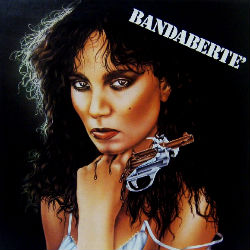
Loredana Berté: Bandaberté (GCD, 1979)

Reggae was quite of a novelty for Italian musicians, back in 1979. "Bandaberté" was one of the first pop albums to explicity flirt with that style, and surely one of the most accomplished ones. The sound is very definite and professional, well-aware of the funkiest jazz-fusion and disco music, and definitely makes the difference in making the music elegant and groovy. Loredana Bertè's coarse voice, in fact, isn't elegant at all, but undubitably gives the songs a magnetic charisma: the very spontaneous interpretations are perfect to balance the cold politeness of the arrangements.
Though upbeat rhythms are central in the album, many styles surface in the songs. There are jaunty acoustic episodes ("Colombo", "Dedicato"), and liquid synth riffs ("Robin Hood", "Agguato a Casablanca"), but most of all a bunch of memorable songs, such as the evergreen "...E la luna bussò" or the fervent Battisti cover "Macchina del tempo".

"Bandaberté" is the fourth album by calabrese singer Loredana Berté, sister of Mia Martini. The songs are written by Il volo's Mario Lavezzi (who produced the album) and such renown artists as Ivan Graziani, Lucio Battisti, Ivano Fossati.


Tracklist:
  1. ...E la luna bussò
  2. Robin Hood
  3. Peccati trasparenti
  4. Colombo
  5. Prendi fra le mani la testa
  6. Folle città
  7. Agguato a Casablanca
  8. Dedicato
  9. Macchina del tempo
Download (128 kbps)


Similar music on the blog:
Ivan Graziani: Agnese Dolce Agnese (Numero Uno, 1979)

Donatella Rettore: Kamikaze Rock'n'Roll Suicide (Ariston, 1982)

Friday, September 10, 2010

1  

Giusto Pio: Legione straniera (EMI, 1982)

I hope you'll get used to the publishing of some Battiato-related stuff every now and then in the blog's "Eighties" corner. I personally believe his school is one of the greatest moments to ever bless Italian pop music. As for today, let's concentrate on the second solo album by Giusto Pio, 1926-born violin teacher and longtime collaborator of Battiato's.

As a matter of fact, "Legione straniera" is a two-hands work by Pio and Battiato. Pio's compositional style relies mostly on his violin, and embodies an ideal trait-d'union between baroque music and postmodern minimalism. Elegance, repetition, and regularity are the key aspects of the albums, where schematic violin themes fluctuate over Battiato's straight beats, evocating sometimes an outworld placidity, other times more nervous and metropolitan ambiences.
The album collects many extra-European suggestions, but never actually sounds like world music. And despite the strong electronic architecture, the prevailing air is a noble fin de siècle mood.


Tracklist:
  1. Aria di un tempo
  2. Celestial tibet
  3. Cristina's Day
  4. Eritrea's
  5. Giardino segreto
  6. Legione straniera
  7. Ostinato
  8. Totem
Download (128 kbs):
 Megaupload
 Mediafire
 Deposit Files
Warning: the audio quality is quite bad


Similar music on the blog:
Franco Battiato: Giubbe Rosse (EMI, 1989)
Francesco Messina: Medio Occidente (Casablanca Records, 1983)